Thursday, July 1, 2010

Kenya Sunday & Monday 6/27-28/10

We are trying to get caught up because we know what the next couple of days look like. Lots of traveling.

Sunday we were up for the 7:00 mass at Nandi Hills in Sister Pauline’s parish church. The church was filled with two schools worth of students and the local parishioners. At least 200 at this early service with two more services to go. After church we went to Sister Pauline’s sister’s (Anne) house for breakfast and met her husband (David) and their children. David is a teacher and Anne works as a secretary in the school district office. Once more Stan made the children cry and run down the hall to hide. Later in the morning all of the kids climbed into the back of the truck and just like home were in hog heaven. By the end of the morning they were even willing to let Stan help them out of the truck. They were still sure that if they rubbed hard enough on his hands maybe the white would rub off and Stan would be better.

Once more back into the truck and on to Ahero where we had lunch and Sister Margaret had a meeting. During Margaret’s meeting Yvonne, Pauline, and I continued to improve the decision making chart for the Sister’s organizational structure. The reason that the organizational chart is so important is Sister Margaret was trained in the US in leadership and management and has brought a new style to the organization of the Franciscan Sisters of St. Joseph but the Sisters need a visual representation of what Margaret is talking about to internalize the change. Also on a more immediate basis Sister Margaret met with several granting organizations in Germany and they were unwilling to continue the process until the Sisters could show a clear organizational decision making structure and how the grants would be managed. To just say “trust us we are Sisters” did not work. So we keep clarifying what they actually do and discovering how decisions are happening away from those who should be making decisions. Sister Margaret and Sister Pauline really understand this theoretical change and will be the people, when we leave, who will put it to use.
Back into the car and drove down the “dancing road” greeted everyone, had dinner, and crashed.

Back up on Monday and off to Homo Bay for the celebration Mass for the new leaders of the Franciscan Sisters of St. Joseph, Margaret, her council, including the local and regional leadership. The Cathedral at Homo Bay sits on top of the mountain overlooking Lake Victoria and Homo Bay town. The Mass was glorious. The 40-50 person cathedral choir sang and danced to all of the liturgical music and hymns. Yvonne and I were introduced and when the choir was told that she was a Minister of Music she got applause. After the service Yvonne was introduced to the director and the choir and was able to make plans to get Xerox copies of some of the music which was composed by the director.

This was another all day affair with speeches after the mass. (And again Yvonne and I were introduced and expected to speak. Stanley gave the mike to Yvonne and Yvonne did a great job. When Stan was asked to speak he passed the mike to the MC without speaking believing that he could not do as well as Yvonne had done. This got a laugh from the audience as in this culture only the man would have spoken. One of the choir members later said, to explain the incident, “When she (Yvonne) speaks, you (Stanley) have spoken”. This meant that she understood our explanation of what happened and was teasing us about it.)

After the speeches, we were invited to the Primary School Auditorium just down the hill, for entertainment. The choir sang, the primary students sang and recited poetry, the vocational school students sang and danced, gifts were handed out and then the cake was cut. We were invited onto the stage to assist with handing out the gifts to Margaret and her leadership team. After the gifts, there was the ritual of the cake-cutting and serving it to the audience. Now we had seen this at the Ordination at the very beginning of our trip, but we didn’t know that this is a customary thing to do for celebrations. They asked me to cut the cake, but I somehow knew that there was more to it than just cutting, and when I hesitated, Margaret stepped up to help me. Then everyone on stage put their hand on the knife and we cut the cake into long strips. Then Margaret took the knife from me and began cutting small pieces. Serving plates appeared and were filled and we took them to all the people and to the children waiting outside the doors after they had performed. The last part of the day’s celebration was the awarding of the goat. Now, I don’t know who was giving the goat, but everyone on stage had to receive it. This entailed having one of the students drag the poor goat across the stage so everyone could see it and then we all held onto the rope, symbolically accepting the goat. This is also a ritual gift-giving in celebrations such as this one. But sometimes the goat doesn’t come and so one is presented with just the rope.

We left Homa Bay about 3:00. Margaret had managed to have a meeting with the Bishop and Pauline saw to it that we had some time to visit with him. (We are getting quite cozy with several Bishops in Kenya.) We drove to Kisii in order to visit a sick sister in the Order’s hospital there, Christine Marianne. We also wanted to get a tour of the hospital. Stanley has an idea to try to link that hospital with some people in Salinas and wanted some pictures and information about their needs. That put us home in Asumbi about 8:00 (an early night for us.) The Sisters had dinner waiting and we went to bed.

Tuesday, June 29, 2010

Kenya Friday-Saturday 6/25-26/10

Yvonne has taken over writing this blog so you can appreciate her perspective on our trip. You will notice it is the longest blog yet.


Friday we left on our second road trip. We drove from Nairobi to Lake Borgoria National Park. It is known for the hot springs and geysers. We left Nairobi at 12:00 (later than we expected) as Sr. Margaret had papers to sign. As part of the adventure we turned off on a dirt road that was to bring us into the back of the park. Little did we know what this decision was going to mean. It was good that we were in the 4X4 pickup (again a good decision) for two hours we drove on roads that got worse and worse. We made several wrong turns and were redirected by the locals. When asked where the lake was the standard answer was “Just ahead”. Well that is true it was just ahead but mileage is not clear in their minds. One old man told us it was 3 kilometers but after 15 kilometers it was clear it was “just ahead” but not close. We arrived at the lake at 5:00 but were now several hours behind the schedule but on African time. Again it was perfect timing. We watched the flamingos (bright pink with red and black coloring that you only see when they fly) settle down for the night, the sunset over the lake with a full moon rising was spectacular, a rainbow show it colors, and many animals come out to the lake for their evening drink. All of that was a plus to the hot springs and geysers.

We took the easy way out, on a paved road, and as night descended and the country got darker we headed for Sister Pauline’s boma (home). This too was not a route that John the driver or either of the sisters had taken so we kept asking people how to get across to Nandi Hills. We stopped in Ravine about 10:00 and had a cup of chai with Laina Kasegem a friend of Sister Pauline’s. He was able to give us clear directions to Nandi Hills and then it was smaller and smaller roads that ended in a classical hedge that surrounded the compound. We had arrived at Pauline’s house at 12:30 am. Her aunt and uncle (Helen and Raphael) greeted us and welcomed us home with some of the children (Celestine, George and Barnabas). Helen had supper waiting for us and then it was off to bed. An amazing day.

Saturday morning after breakfast, Pauline’s uncle arranged for us to visit one of the tea factories in the area (Kapsimbeiwa). Nandi Hills is one of the major tea-growing areas of Kenya. The hills, as far as the eye can see, are covered in tea plants. These are owned by large land owners and called tea plantations. One of Raphael’s contacts is the manager of the factory and he allowed us to visit the factory for a tour. Raphael and many of his neighbors own small plots of tea. They have organized into a co-op and also sell their tea to this factory.

Picking tea leaves has for centuries been done by hand, back-breaking work and hugely expense labor costs. Recently, a mechanized picking machine has been developed and introduced to a few of the plantations. This is very controversial because the laborers come from many areas of Kenya for the work in the tea. Some have lived in the labor camps for several generations and have no home to return to. These labors camps are nothing like ours. They are called villages, and contain solidly built homes, schools, gardens, dispensaries, and social halls, etc. The controversy continues as a few owners cut the labor costs by using the machines which do not pick as carefully, or evenly as by hand. (Ever heard of this dilemma before???) Raphael made it possible for us to enter the fields and view both the hand and machine – picking of the tea.
After the tea is picked, the pickers sort and clean their leaves and pack them into gunny sacks, which are weighed and loaded onto trailers pulled by tractors headed for the factory. The factory is divided into three main areas-1) withering (allowing the freshly picked leaves to wilt over night in large table trays); 2) oxygenation (the leaves are cut into fine pieces, the stems and twigs are removed, then the process continues with each cutting into smaller and smaller pieces; then air is blown through the finely chopped leaves (which now look like damp ground cumin) which dries the leaves and they change to a darker color); 3) drying and grading (this requires a huge wood-fired boiler which makes steam to heat the air which is blown through the tea which dries the tea; as the tea exits the drying chamber it is graded by passing it through screens of various sizes {similar to walnut grading} so the finest tea, the very best grade, is pulled off first. It is packed into 60 kilo bags, placed pallets and shipped to Mombasa for auction. We were invited into the testing room, where samples are brewed and tasted to insure quality control every hour. If there is a problem, it is addressed on the line immediately. Tea processing is highly affected by the weather-humidity, temperature, rain, etc. Then we were invited back to the office to have a cup of tea. It was great.

When we left the tea factory, we went to Sister Pauline’s mother and father’s home, the home where she was raised. This home is the center of the entire family village and is surrounded by the homes of other family members. They graciously offered us a huge lunch and family talk in Nandi (Kalenjin), a language which we hadn’t heard too often. We have learned the greeting word “asaai” which must include a big hug, and “kongoi missing” which is thank you very much. We used our words frequently as they are a very loving and hospitable family. After lunch we walked to many of the homes and visited with Pauline’s great aunt and uncle who wanted to serve us tea to welcome us into their home in the worst way, and Pauline’s cousin and her brand new baby, Perpetua. Many of the little children had never seen a mzungu (chumbindet in the village), a white person, so they cried and ran away from us. Touching us was not a possibility. Stanley terrified them with his grey beard, low voice, and white skin. All of her family were warm and friendly, teaching us words, showing us their shambas (farms), rope-driven water pump (all water is hauled in buckets to the home), the animals, the corn (maize) grinder which makes corn flour for their ugali (kimiet in Nandi). This is the ever-present polenta-type food served with milk and green vegetables. When we returned from our walk, we were invited into Pauline’s mother’s kitchen (which is separate from the house) to sit on benches with her and watch her make pancakes and roast maize in the fire. It was a very special moment for us. A very real Kenyan moment.

Meanwhile, the truck radiator was repaired after the pin-hole leak was created by the road leading into Lake Bogoria. So we climbed into the truck and headed for Pauline’s elder brother’s home to share a cup of tea. Again we were welcomed and shown his shamba. His maize (corn) is “as high as an elephant’s eye”. Margaret wanted to know his secret and he told her it was cow dung tilled into the land which sat until the first rain and the planting. She plans to use this technique in all of the shambas in the convents. We were then invited into their home and served tea and visited as the sun went down and it became dark. Pauline’s sister-in-law brought in a small paraffin lamp which we are told is used in many families who do not have electricity and a lot of children do their homework by this light. The warning is to laugh, sneeze, or cough gently, as any slight movement of air blows out this tiny light.

We left and returned to Raphael and Helen’s home for the dinner and for the night. This was our last night in Raphael’s and Helen’s home and we were leaving early in the morning for Mass and travel to Asumbi via Ahero. So Pauline orchestrated the farewell ritual to happen after dinner. This entailed Raphael expressing his pleasure at our visit and then inviting everyone in his family to also speak, even Celestin the 10 year old and Helen who speaks little English. Then we were invited to speak and we offered our small gift of thanks and Pauling spoke and finally Margaret wrapped it up with her theological treatise on families, friends, guests, and hospitality. It was a fabulous way to end our visit. Sunday morning we rose early and said more good-byes and departed.

Kenya Wednesday - Thursday 6/23-24/10

Father Steve continued to worry that we had not seen a giraffe and suggested to Sister Pauline and Sister Margaret that the Giraffe Center would be a good place to take the wazungu (white guys, we hear that a lot). So we were up on Wednesday morning on a Safari in Nairobi. First we went to Mamba Village (Crocodile Village) to see the Nile Crocodiles, ostriches, and one lonely giraffe (Reticulated Giraffe). It was a little disquieting to have the young guide jump into the crocodile enclosure to tap them with a stick so that they would open their mouths for us. We were able to touch a one year old crocodile and watch as they played in the pond. Next we were introduced to the ostrich dance where the male ostrich came up to the fence and did this wonderful dance just for me.


We visited where Sister Margaret taught last year before she became Superior General. We were introduced to Dennis Ongeri who is the Scholarship Director who knew Pauline and Margaret. Our conversation included an in-depth critique of the proposed Constitution (this happens often as the vote is coming up August 4 and many people are worried about the outcome). Sister Pauline took us up to the chapel which was designed using images of a African traditional religion (which combines spirituality and every day life). It is a very vibrant and spiritual space.

Then off to the Giraffe Center. What an experience. The center houses 9 Rothschild giraffes whose environment in Eldoret region was destroyed by the development by people. This center was developed to save the Rothschild giraffes and has increased the population 300 and has become an education and research center which brings in the orphans and school children to see and touch the giraffes. When we entered the center, I thought that Yvonne was going to jump out of her skin. Here were the giraffes standing in a meadow overlooking Nairobi. The contrast in color made the giraffes pop out of the landscape. You walk up to a wall and the trainer gave you some kibble and the huge head of the giraffe lowers to your hand and a 18 inch tongue gently removes the kibble and the head elevates in a gentle fashion back up to 15 feet in the air. You could put the kibble between your lips and get a kiss from a giraffe but I could not convince Yvonne to do this (and I really did not want to kiss Yvonne after she had kissed a giraffe) (This is Yvonne: I did not want to make Stanley jealous so …..). The center was constructed so that you could go upstairs and look directly into the eye of a giraffe which was very interesting. Around the feet of the giraffe were a group of warthogs who live symbiotic relationship with them in the wild. They were really funny because they would startle and head off in a direction only to stop and look around as if they had forgotten what they were doing. We spent some time in the center listening to a lecture which was well done about the Rothschild giraffe and then back on the road.

We went back to the Mamba Village for a great lunch on the lawn and then off to visit the Catholic University of Eastern Africa. We were introduced to the Sisters that are working at the university in registration, housing, and catering. Sister Pauline introduced us to the new building and once more it was clear to me the issue of water. Every building collects rain water to use on the grounds and huge tanks were in the ground to store water to keep the university working even if the city did not supply water. The grounds keepers use interesting lawn equipment, sheep, to mow the lawn. I suppose that this lawn equipment is eaten later for lunch.

We returned to the Bomas House to have dinner. It was nice to see the house and this group of Sisters as this was the first house we visited on our first full day and all was a blur. Then back to Savelberg and bed.

We were up Thursday morning for new adventures. Sister Pauline and Sister Albina took Yvonne and me down to the garment district. One store after another selling fabric with tailors next door. Now your vision of a fabric store is nothing like what we saw. Upstairs, in what used to be an apartment living room, were eight ladies who had stacks of cloth. Each was shouting “customer, customer” and showing cloth. Thank God we had Sister Albina who was used to the environment. She talked to each of the women and had them show the material. She was able; by feel and look to identify good and bad material. We worked our way through several piles of material and then went to the next shop which was a little more open. Yvonne and Albina found cloth for a dress and shirt for Yvonne and I and cloth for a table cloth. We next were measured at one of the tailor shops and Sister Albina left us to go to her work.

We stopped by a Tuskys (their version of a Wal-Mart) to get a snack and then off to the Nairobi National Museum. This museum was recently renovated to increase the size of the museum and add the Hall of Kenya. Remember this is the country where Louis and Richard Leakey found some of the oldest skeletons in the world. Sister Pauline found a guide to take us around the museum. We started in the Hall of Kenya where there was a sculpture that represented the tribes of Kenya (42 distinct tribes) using gourds that are used in each tribe to represent it. It was a great representation. For over 2 hours the guide took us from room to room. There was a room of skulls and bones of the early findings by Leakey and his son and there were rooms that represented the different animals and their mode of transportation (walk, soar, swim) demonstrating how the animals evolved in Kenya. There were rooms that showed the different clothing and tools that the different tribes used and then several rooms of just birds. It was a great museum and when we finished we had a cup of chi (Kenyan Tea with lots of sugar).

We then drove back to Assisi House to check on the process of the plumbing. The small tank was in the ground and the pump hooked up. It was a joy to see the water pumped into the city water tank. They had knocked out some of the wall in the ceiling to be able to get the old tanks out and the new tanks in. They had taken out the old tanks and looking at them it was clear that that was a good choice to replace them. They were rusted through.

We walked back to Savelberg to get packed and ready for tomorrow’s adventure.

Kenya Monday - Tuesday 6/21-22/10

After the Saturday meetings it became clear that a program that I had used in the US would be useful to the Sisters. Margaret made arrangements for us to go to Father Steve’s Seminary (where he is the Rector/president) to have use of a real internet connection. We spent most of the day in the library, downloading the program and then working on the organizational chart of the Sisters. In doing that work, gaps in the structure became clear and the decision-making charts will help Sister Margaret and her council to clean up the decision-making process.


Then we got a tour of the Seminary’s new language lab and department. It was quite up-to-date and impressive. It might be interesting to hook up Hartnell or DLI with this group and share information and teaching techniques. It was quite impressive. The day ended with programs installed in all three computers, work on the organization charts, and clean up of our e-mail. (Many days we are able to see the e-mails that you send but not able to respond. We do not know what is going on but every chance we get we are trying to respond and sometimes it goes through. Remember we are on dial-up.)

Tuesday we slept in and did some laundry. The long drives, the heat, and late night arrivals with early mornings finally caught up with us. We were pooped!! Later in the morning we went over to Assisi House to check on the plumbing. Well, not all was wonderful. The world of plumbing had taken a new twist. The city had not had enough pressure in their system to push water into the Assisi’s city water tank. They had not had new water since we had left (10 days earlier). They had rationed the water I had pumped into the ceiling tanks and were out. It was clear that the plumbing issue was not solved and a new tack had to be taken. What was being done in houses around them needed to be duplicated. Each house had a small tank buried in the ground so whatever the pressure the city water would run into the tank. Then a small pump was put next to that tank to pump it into the larger city water tank. I also found that two of the ceiling tanks had rusted through and needed to be replaced. This was becoming a larger issue than I could fix by myself. In discussion with Sister Anne, we decided to have a plumber come out and give us a bid on the work. Yvonne and I had not spent the money that some of you had given for the Kenya Project ($80,000 Kenyan Shillings all together) and I thought it was better to complete one project rather than spread the money around to several projects. The Sisters agreed to hire the plumber and called one that they knew to give us a bid. He (Stanley), I (Stanley), and Sister Anne walked the building and talked about what needed to be done. Sister Anne and he talked price and came to an agreement. (1) The small tank and pump would be put in line with the city water tank including the electrical hookup for the pump. (2) The tanks in the ceiling would be replaced. (3) Several toilets would be replaced and others made operational. (4) The faucets in the kitchen would be replaced and others would have washers put in them. If I could get $7,000 Kenyan Shillings to him today he could purchase the materials for the small tank and pump and get started tomorrow. All of this fit within our budget so a deal was struck, an invoice was developed, Stanley (the plumber) would write out the scope of the project before he started (this was odd for them but you know those Americans). (Sister Anne liked this as they had been burned before with work not completed.) Sister Anne will manage the project as Yvonne and I will not be around much this next week. We then walked home (Savelberg Retreat Center) to crash again.

Kenya Saturday - Sunday 6/19-20/10

Today was the day the Yvonne was to give her presentation to the Franciscan Sisters of St Joseph and I was going to listen in on one of their meetings and do a session on organizational decision making. So we were up and at St. Claires Hostel by 8:30 so we would be ready for the 9:00 meeting. But African time prevailed and thing got started after greetings and tea about 10:00. Yvonne asked me to leave the room and go do a blog during her presentation. So she will have to write this portion of the blog.


Yvonne here:

Well, I was pretty intimidated by the Sisters. What did I have to tell them about Spiritual Gifts and Ministry. But here I was in front of their expectant and encouraging faces, so I began. Although they were a little hesitant to answer questions and join in discussion, I cajoled them into it and all went well. I presented them with the exercise of the Spiritual Gifts Inventory that we did at the Women’s Retreat. I had to translate most of the questions into something that related to them and not Americans, but they all participated. Thank goodness we have been here a couple of weeks and are beginning to have a little understanding of how things work here. They worked in teams to score it and were amazed by the results. We talked about the many unique gifts we each have and how, in an organization like theirs, it was important to honor their own gifts and support the gifts of others. This is new thinking for them, but they all really liked it and wanted to know more about it. So, maybe on the next trip I’ll do a follow-up and present some other ideas.

Stan here:

At 3:00, after lunch and the finish of Yvonne’s presentation, everything stopped and they had a Harambee. Now Yvonne and I had no clue what this was about but Sister Margaret told us that this was to raise funds for the completion of the hostel compound here at St. Clares. That includes a convent and three more dormitories. This Hostel is right next to the Catholic University of Eastern Africa and serves as a safe place for the women students to live. The Rotary would be put to shame. They started out by being strongly requested by students who currently live in the hostel to buy a ticket to get in (it bought you nothing else but a seat). There was great fun when I bought some of the Sisters without tickets a ticket so they could come in. I guess no one had ever done that. Then our very own Sister Pauline became the master of ceremonies and the fining began (for laughing, talking out of turn, standing up, not standing up, for being the oldest sister, for being a sister who graduated with Superior General, etc. This continued for about 2 hours and then they got serious. Each Region had pledged money to the completion of the project and several parents and local organizations presented their donations. By the end of the day they had raised 360,000 Kenyan Shillings. This was the first of several Harambee’s that were to happen. They are still well short of what they need to raise (16,000,000 Ksh) but……

Finally about 7:00 we broke for dinner and then back into session for their committee meeting. This went to 12:30 am when they finally decided they had done as much as they could do. During that time I worked on some issues around meetings and organization structure.

Then back to Savelberg to bed.


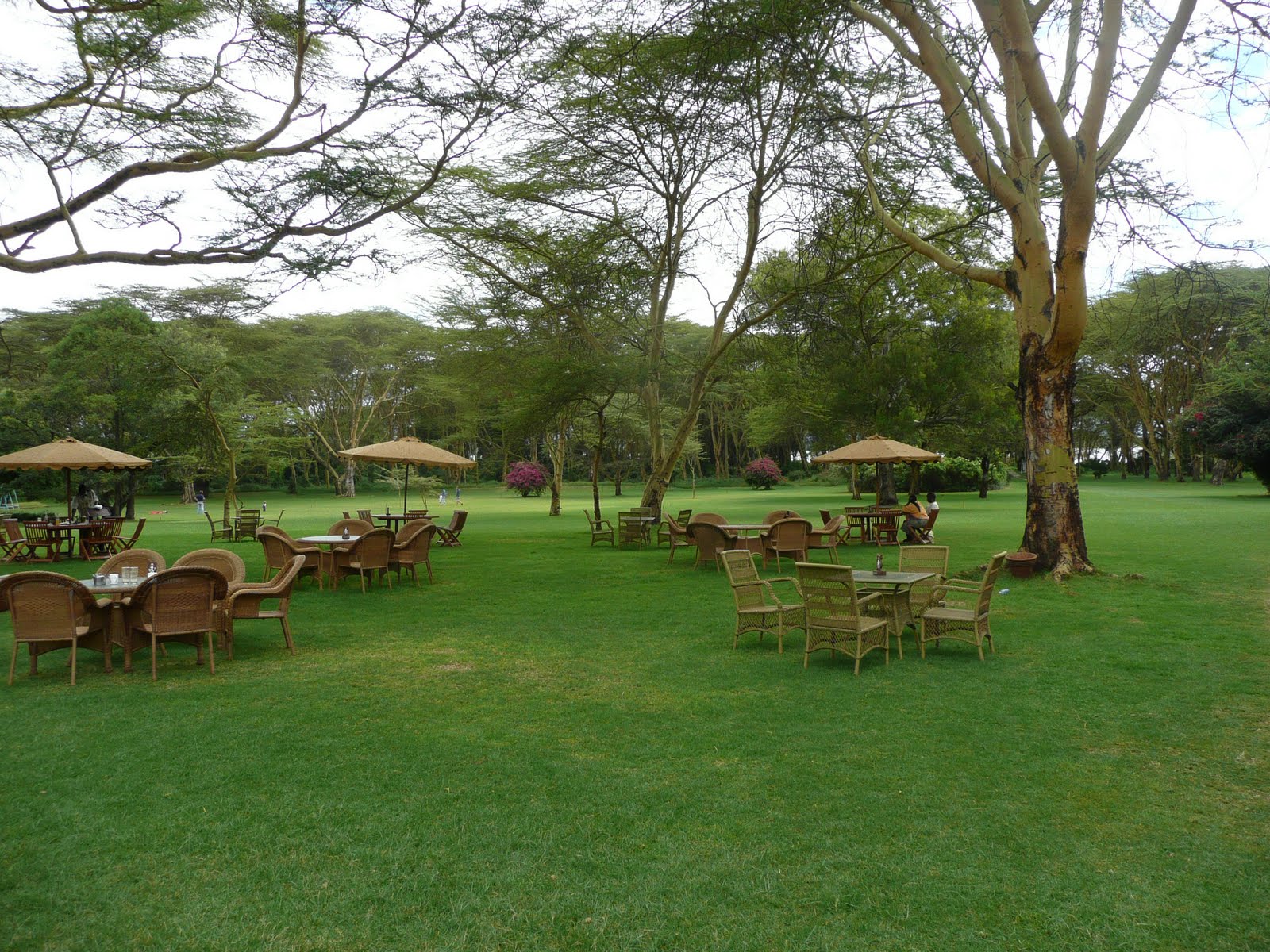
Sunday we were up again and on Safari. We were treated to a lovely day by Father Steve Okello (Margaret’s other brother from her second family). We got on the road and drove to Naivasha along the Escarpment road (we have driven this road several times but always at night). The view from the top of the Escarpment into the Rift Valley is amazing. We traveled on to Naivasha Lake and had lunch at the Safari Country club on the lawn. It looked like something from the movie “Out of Africa”. It was a wonderful meal with discussion about the development of the new Constitution, hippos, and the fact that the economic status of some Kenyans has improved and more Kenyans can eat at this club and most weekends you will find more Kenyans than tourists using the facilities.

After lunch we traveled to Nakuru National Park where we had the experience of a life time to meet the animals up close and sometimes personal. We arrived late afternoon, the best viewing time, and Steve is very familiar with the park. We immediately ran into a group of baboons with their babies romping on the road. We were very excited even though Kenyans view baboons as a pest. Next up on the list of animals were zebras, a whole herd of them. Then in order of appearance, a group of large storks, a flock of flamingos, several herds of several sizes and types of antelope, a family group of rhinos, a pride of lionesses with their cubs jumping and playing with the mothers, an enormous herd of buffalos (nothing like our buffalos), a rhino who nearly joined us in the car, and finally a lonely hippo out grazing in the meadow. What a day!!! The only thing we did not see that Steve thought we would see were giraffe. There is no way to show you all of this so you will just have to come to the animal show with all 1000 photos. By then it was really dark and we headed back to Nairobi and Savelberg.

Thursday, June 24, 2010

Kenya Thursday - Friday 6/17-18/10

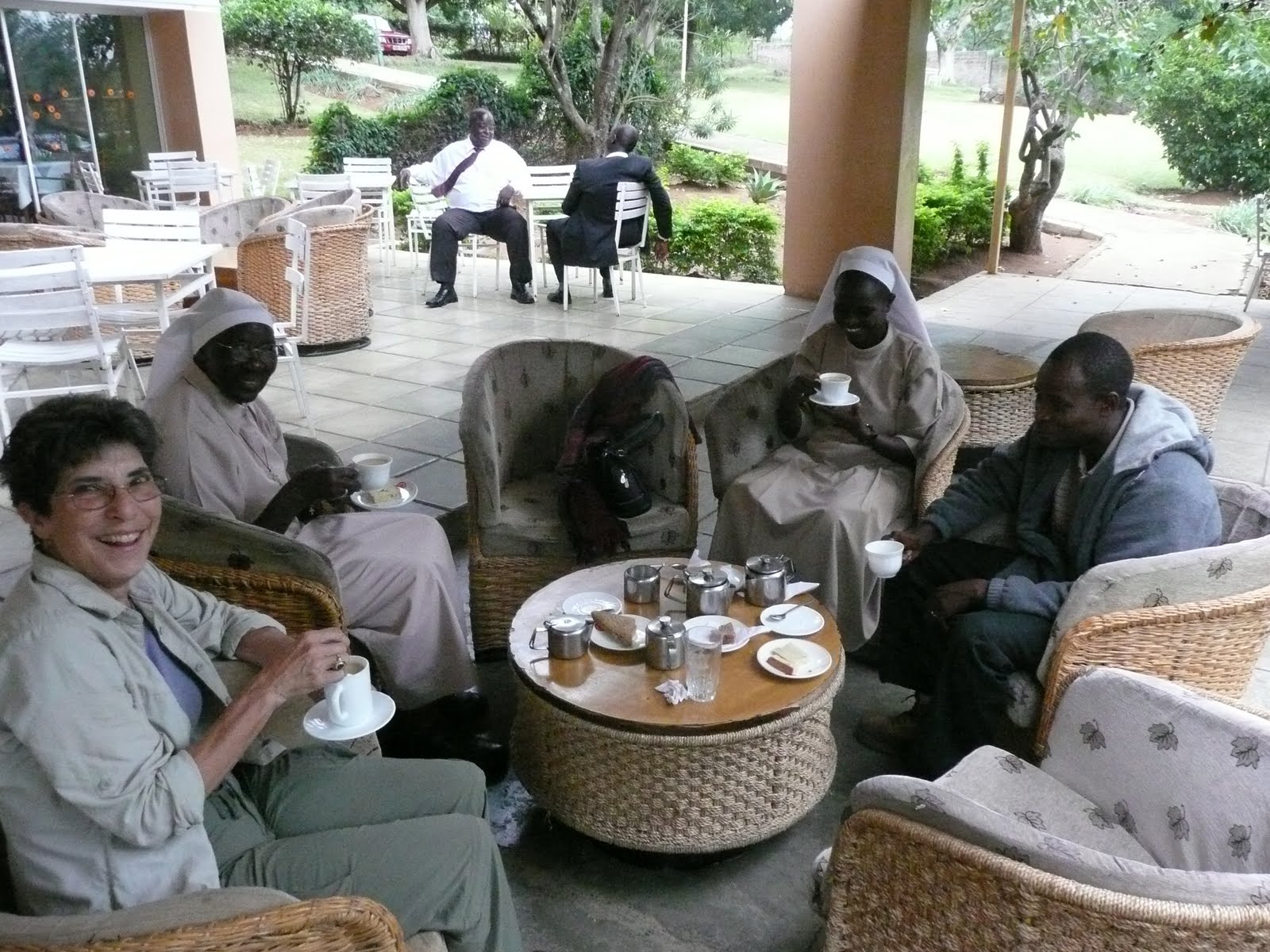
Thursday morning we were up and packed. We walked down the lane to the next plot to see our host’s, Rose, plants in her nursery and then packed up and drove for two hours back to Kisumu because Margaret had a meeting with the Arch Bishop. He welcomed us for tea and we chatted while they met. Margaret had to then met with the Provincial Director of Education. That meeting was not until later in the afternoon and was to be quick.


Margaret took us to one of the projects that they are working on, St. Clare’s Home of Hope. This is an orphanage that will replace an orphanage that has been condemned which serves 48 orphans due to AIDS. The only reason that they are handling such a small number is because of space. The new orphanage will house about 200 orphans with a dispensary, school, dorms, dining hall, staff housing and a convent for the Sisters who will run the operation. The convent and dispensary are almost finished and the well has been dug but the rest of the operation is some walls and foundations. This is one of the main focuses for the Sisters this year because the government will close the other orphanage by the end of the year. With enough money, this could all be finished in three months but money is a precious commodity in Kenya. The AIDS issue is huge here and they are making great strides but many parents are still dying and leaving children to be cared for.

We left St. Clare’s and dropped off Margaret and once again headed for Lake Victoria and Hippo point. Well the lake is just huge but the hippo’s were asleep under the water in the next bay but the view was splendid.

We kept checking in with Margaret but the Provincial Director of Education had not met with her yet. We went to the Sunset Hotel and I had a beer while others had chai. We hung out there in wonderful surroundings for 2 hours until Margaret called and said to come pick her up. We drove over and found out the director had refused to meet with her without the Arch Bishop and that was to happen tomorrow. We belonged in Narok for Prize-Giving Day at Sister Mary Stephen Koitoi secondary school.

Narok is a 5 hour drive from Kisumu. We had dinner with Margaret in a really "fine bar" (the only thing open at that time), dropped her off at the convent and headed out to Narok about 9:30. We arrive about 2:30 in Narok and were taken to a hotel where we crashed.

The next morning came too soon but we were up and at the secondary school by 9:00. This school had lots to be proud of. The prizes were academic awards. The school had achieved the distinction of being first in the district academically after only 4 years of being open.

Narok is in the heart of the Maasi Region and this school was named after the first Maasi Sister in the order. This is a big deal as the Maasi were reluctant to send their children to school away from the traditional upbringing. There were several traditionally dressed parents there and many others who carried the Maasi stick of rank even though they were not traditionally dressed.

The day started with Mass at 9:00 and by 11:00 the entertainment started with dancing. We did not realize the extent of the program. There was original poetry, songs, Maasi dancing, comedy sketch, and acrobatics all done by the students. About 1:30 the award presentations began. As honored guests Yvonne and I were asked to help congratulated the winners and hand out their gifts. Each student received school supplies and their parents were also given gifts for supporting their students. Gifts of school supplies are important because this is a poor area and students have to buy their own.

At about 3:00 the speeches began, all nine of them. Each speaker recognized that the day had been long and said at the beginning of their speech that they would be brief. I would hate to see the regular speech as we finished the speeches at 5:00.

Then we had dinner, climbed into the van and headed for Nairobi. We arrived in Nairobi about 9:30 and crashed. The next day Yvonne and I were to participate in the Sister's regional meeting. (Yvonne’s workshop on Spiritual Gifts and Stanley’s discussion about organizational and management theories to help their Congregation’s organizational renewal.)

Tuesday, June 22, 2010

Kenya Tuesday - Wednesday 6/15-16/10

Tuesday and Wednesday were days set aside for Margaret to show us her home region. We left Asumbi about 10:00 and got to drive down the dancing road that we drove in on in the dark. We drove through Kisii and on to Kisumu where we stopped for lunch at the Arch Cathedral where we found that the Sisters convent had been demolished because it was so old. There are plans to rebuild but until that time they are living in a number of buildings that are owned by the diocese. They laughingly told us that they were a convent without a house but God would supply.


Back on the road towards Siaya. Little did we know that Siaya would be 3 hours away with the roads getting worse and worse. We arrived in the dark (the Sisters call themselves “Night Runners”, as they often travel like this to meetings and events. So we became “Night Runners” with them. We arrived at Mbaga Convent about 10:00 where we had dinner with the sisters. Margaret had a meeting far into the night but first she took us to her second family’s home. Mama, Rose, Michael, and Steve helped raise Margaret. Their families were very close and this was a reunion after 10 years of Margaret being in school in the States. To get to this house we drove on smaller and smaller roads and which were rain sodden and washboard out across a meadow and then having to back up because the road was washed out and back down another track to her house. We cannot describe how dark it was out there.
We arrived at the compound and found a wonderful little house with electricity, shower, and TV. We could not have guessed. We were greeted by Rose that night and welcomed to the family home.

On Wednesday morning we were greeted by Mama. She spoke no English, only Luo, so Sister Pauline had to translated for us. But the greeting was warm and she was a delight and excited to tell stories of her children, Margaret, Margaret’s mother and a school mate who is now the Bishop of the Diocese.

Margaret finished her meetings and arrived. Michael, who is the younger brother, joined us for the day. We headed off to Margaret’s family home. She had not been there for 10+ years and she was like a little kid she was so excited. More rough roads that narrowed into walking paths that the van pushed its way through to a pastoral setting of several buildings and open compound that made up Margaret’s family home. We spent some time there while Margaret told stories of her childhood and the neighbors came over to greet her.

Her aunt, who she calls mama, (family relationships are fluid) is Sarah Obama’s sister. Mama decided to join us as well on the next stop for the day which was to be Sarah Obama’s compound. We drove back to larger dirt roads to the town of Kogelo past a school named for President Obama and down the road (well maintained) to her compound. The gates were closed. The military guard stopped us and refused admittance even for her sister. There was a discussion for about an hour but it did no good. We took pictures. The one to the right is in front of Sarah's corn (maize) field.  She is well known for her farming practices. They are so worried that something might happen to her and reflect badly on the country. As we drove to Sarah’s compound we heard stories about the reception for Senator Obama, how during the election American flags were flown throughout the area, and how proud they are that a Kenyan is President of the US (Kenyan family linage is tracked through the father so for Kenyans President Obama is Kenyan because his father was Kenyan. It does not matter that he was born in Hawaii.) They also told stories about Barack Obama visiting his grandmother when he was about 16 and how he sold vegetables in the local street market. Michael was school mates with Obama’s father and was on the team that planned and executed the reception when Senator Obama came a few years ago.

But the day was not done. We then drove back to Kisumu (about 2 hours) to watch the sunset into Lake Victoria and see the hippos at Hippo Point. (Too much in one day. We got there after the sunset and the hippos had gone to bed.) So back into the van and 2 hours later back to our little compound. What a wonderful and full two days.